Degrowth Arts in Tai Kwun, Hong Kong
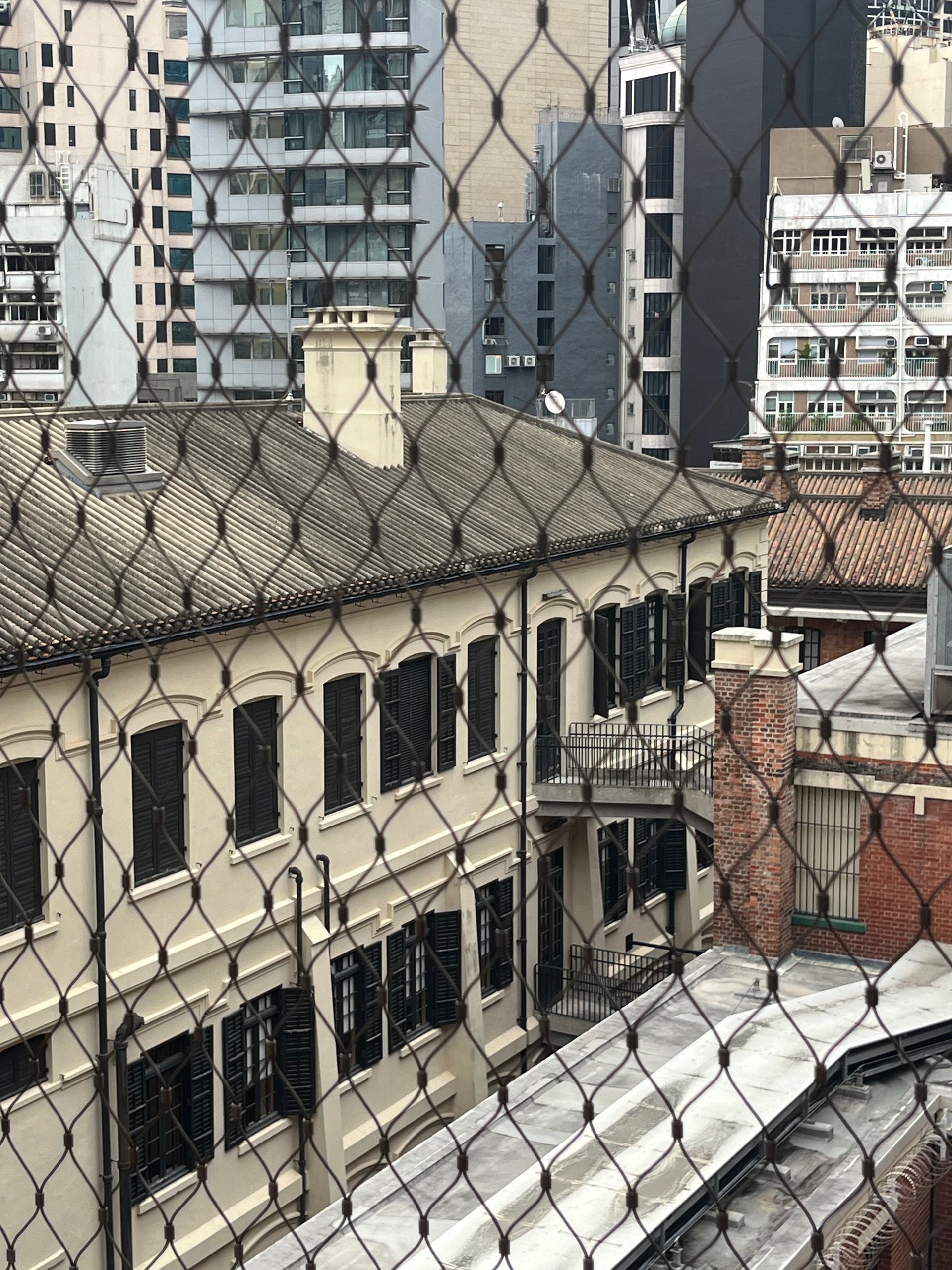
Tai Kwun, since its reopening as a heritage site housing arts and leisure facility, has been celebrated for its success in balancing historic values and contemporary purposes. A former prison, immigration centre, and police headquarter, Tai Kwun now provides breathing space in the bustling urban vicinity of Hong Kong. This has been a genuine confidence boost for heritage conservation endeavours after the complex was sealed off from the neighbourhood for a whole decade between 2004 and 2014.
Essentially, looking beyond all the celebrations and awards, how to conduct revitalisation in a meaningful way for sustainable communities is a persistent quest. This reflective piece looks into a recent exhibition hosted in the JC Contemporary of Tai Kwun, namely the Stay Connected: Art and China since 2008, in the perspective of degrowth, adapting to climate change, and urban resilience.
The year 2008, Beijing Olympics took place - China sees a new generation of independent youth becoming more critical about realities; arts produced by Chinese in the post-2008 period are said to enter a post-heroic era. Art districts in the peri-urban areas in China have been burgeoning post-industrial production and exchanges. In any case, lots of contemporary artworks produced before 2008 by still-young Chinese artists have been housed in the Sigg Collection across the harbour in the M+ Museum.
Arts on the changing climate
A recent report by a British cultural organisation had meticulously collated case studies on artworks about climate change induced displacement. With a candid methodological reveal at the outset, due to limited resources, this report had not covered many regions globally that are heavily impacted by climate change, including China (Olarescu, D. 2026).
Across the two chapters of the Stay Connected in Tai Kwun Contemporary, there were works that touch on climate change, and separately there were frequent mentions of displacement and diaspora, as two isolated subject matters, but they were not about climate change induced displacements after all. Probably with the lived experience of the artists, displacements between China and the world often occurred because of socio-economic factors.
Emergent calls for degrowth
Degrowth is about how to sustain the economy and social wellbeing in a steady way, with the planet earth reaching the age of limits for environmental capacities. In the second chapter of the Stay Connected show, there was a dedicated section about counterbalancing development and ecological conservation, providing a room for understanding and reflections.
A number of audio-visual installations document industrial invasion into the natural landscape and ordinary livelihood. In a video showcase by artist Li Ming, we see a monsterised dinosaur beast style excavator, and it was dramatised to intimidate so as to remove a holdout nail householder (釘子戶) in the process of persistent urban gentrification. A calm voice of a former householder was narrated and projected onto sandboxed display, recalling his fond memories of his now demolished housing after the urban regeneration process of a Chinese city district.
Having practiced in installing artworks in and around emptied aged housing blocks in Shanghai, artist Zhang Ruyu presented her site-based installation to ponder among debris, renovation and self-discoveries in the processes of urban development. It was about rethinking how the intangible and the invisible of urban living - such as elements of light, sound and smells - shape urban memories and life.
On another floor outside the dedicated room, there is artist Ho Rui An’s audio-visual work, recording a two-euro coin standing and staying still on a moving high-speed train that never stops - since the video is on rotation (Chen, 2026). Through the Belt and Road, fears emerge critising China’s diplomacy is imposing modern-age colonisation. The ‘development train’ never stops. Perhaps continued economic growth is a nice to have for ever-increasing quality of life, yet is it reaching a limit? It’s a limit to navigate where all sides are contemplating on the political and planetary boundaries of expansions, which is no longer about ideology or financial capitals.
Referenced literatures:
Chen, Z. (2026) Ho Rui An. in Li, P., Kwok, Y., Yung, A., Huang, W. & Ho, D.S. (Eds.) Stay Connected: Art and China since 2008. Hong Kong: Tai Kwun Contemporary & Asia Art Archive
Ho, M.S. (2016)《大館 ── 中央警署 跨世紀檔案》Hong Kong: Chung Hwa Book Co.
Holdsworth, M.. & Munn, C. (translated by Lin LW)《大館:英治時期香港的犯罪、正義與刑罰》 Hong Kong: Chung Hwa Book Co.
Lam, T. (2015) 《建築保育與本土文化》Hong Kong: Chung Hwa Book Co.
Lee, H.Y. & Lai, C.P. (2021) 《保舊創新——香港建築保育與城市發展》Hong Kong: Arcadia Press
Li, P., Kwok, Y., Yung, A., Huang, W. & Ho, D.S. (Eds.) (2026) Stay Connected: Art and China since 2008. Hong Kong: Tai Kwun Contemporary & Asia Art Archive
Olarescu, D. (2026) Cultural Interventions in Climate and Displacement: Lessons from Eight Case Studies. UK: Counterpoints.
Wilson, S. (2001) Information Arts: Intersections of Art, Science, and Technology. Massachusetts: the MIT Press.
Zheng, V., & Chow, M. K. (Eds.) (2018)《荷李活道:尋覓往日風華》Hong Kong: Chung Hwa Book Co.
Zhou, Y. (2017) Urban Loopholes: Creative Alliances of Spatial Productions in Shanghai’s City Center. Berlin: Birkhäuser
First published date: 20 May 2026
Proofread with important details corrected: 28 May 2026

© 2026 MUSECOLOGY LIMITED